

Creative strategy is the plan behind your ads: which customers you speak to, what reason to buy you give them (the angle), how you grab attention (the hook) and what the ad looks like (the format). On Meta, it also covers how you test those choices, read the results and decide what to make next.
It matters because Meta's automation now handles most targeting. The ad itself decides who stops scrolling, so a clear creative strategy is the biggest lever a brand still controls. This guide defines it, breaks it into parts, and shows a real creative strategy example from AG1's live ads.
What is creative strategy?
Creative strategy is the decision layer that sits before production. Design and editing answer "how do we make this ad?" Creative strategy answers "which ad should we make, for whom, and why?"
In practice, it produces four outputs:
- Audiences. The specific buyers you're talking to, such as a busy parent, a skeptic who has tried other supplements, or a gift buyer.
- Angles. The reason to buy you lead with for each audience: price, proof, convenience, a problem solved, a result.
- Hooks. The first line, frame or headline that makes that audience stop.
- Formats. How the ad is delivered: a UGC video, a static with an offer, a founder talking to camera, a demo.
A creative strategy is a written set of these choices, plus a testing plan. Without it, teams make ads by gut feel, test random variations and can't explain why something worked.
Why creative strategy matters for Meta ads
Meta now pushes broad targeting and automated campaigns like Advantage+. When the platform picks who sees your ads, your levers shrink to budget and creative. The creative becomes the targeting: a video about 48-hour work shifts finds shift workers, and a sleep video from a scientist finds people who care about sleep research.
That changes what "more creative" means. Ten versions of the same message in different colors give the algorithm one idea to work with. Ten different angles give it ten ways to find buyers. Creative strategy is how you make sure each new ad adds a genuinely new idea.
It also saves money. Every ad you make costs production time and test budget. A strategy tells you which tests are worth running before you pay for them.
The 5 parts of an ad creative strategy
Customer research
Everything starts with how customers talk. Read reviews (yours and competitors'), comments on ads, support tickets and Reddit threads. Write down the exact phrases people use for their problem and for what they wanted. These become your hooks almost word for word.
Competitor research
Look at what competitors keep running. A brand that keeps an ad live for six months is very likely getting results from it, because nobody keeps paying for a dud. Long runtime is the best free signal of a working angle. Our guide to the Facebook Ad Library shows how to find any brand's ads for free.
Angles and messaging
Turn research into a short list of angles, each with a target audience and a one-line promise. A supplement brand might test "fills nutrient gaps", "backed by clinical trials", "sleep without grogginess" and "free gifts with your first order". Rank them by how strong the evidence is.
Hooks and formats
For each angle, write three to five hooks and pick a format that suits it. Proof angles suit experts and testimonials. Offer angles suit clean statics. Problem angles suit demos and talking heads. Our Facebook ad examples show 50 long-running hooks across formats.
Testing and iteration
Launch angles as separate concepts, give each enough budget to get a read, and judge them on your own account's numbers. Kill what fails, then make new hooks and formats for the angles that win. The winners from this round are the starting point for the next.
Our creative testing framework turns this into a step by step process with a copyable template, and our guide to how many ads to test per week shows how to size the volume to your budget.
A creative strategy example: AG1's live Meta ads
AG1 is a useful creative strategy example because its account is big enough to show a full system. On October 9, 2026, Adspo showed 658 active creatives for AG1 across 1,031 ads, split between 347 videos and 311 images. Here are four of its longest-running active ads, each a different angle.
Angle 1: the offer, as a clean static
This static leads with the product and a stack of free gifts, with the headline "Clinically-Backed Nutrition Support". It's the most-served creative in AG1's own account (impression rank 1) and has been running for 264 days, with 2 variants.
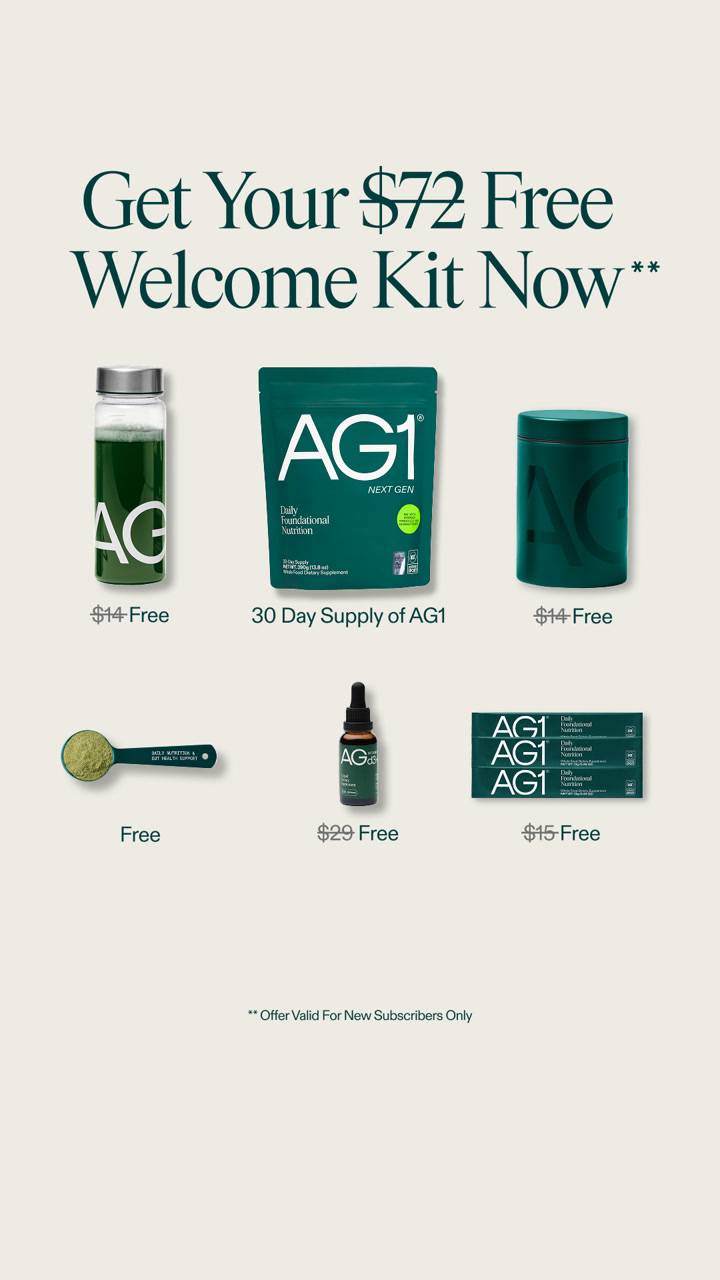

The strategy lesson: the offer angle doesn't need a story. It's for people who already know the product and need a reason to buy today.
Angle 2: expert authority
This video opens with "As you know, sleep is the foundation of mental health, physical health, and performance," delivered by Dr. Andrew Huberman, for AGZ, AG1's sleep product. It has run for 381 days across 34 ads, ranking 33rd by impressions in AG1's account.

The lesson: a new product launch borrows trust from a voice the audience already listens to.
Angle 3: the customer's day
This one opens with "On 48-hour shifts, calls don't really care if you're eating, if you're trying to sleep, or if you're working out," and sends viewers to an energy support page. It has run for 313 days in the US.
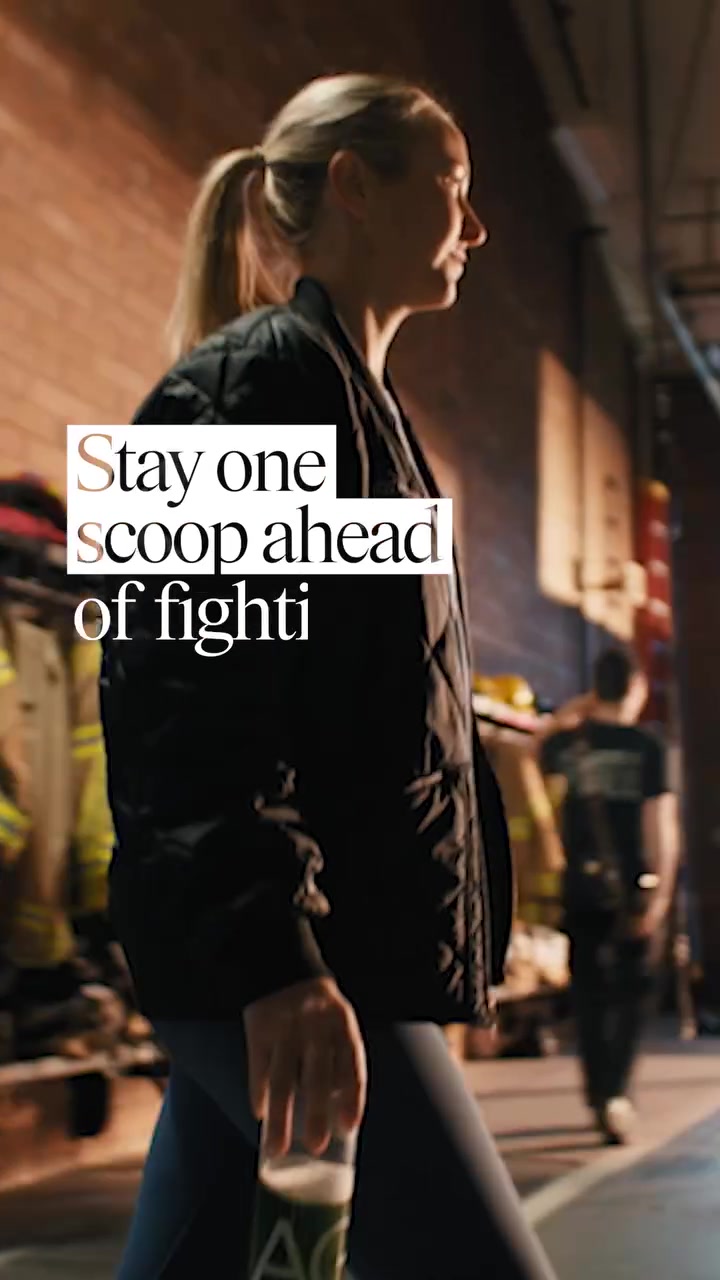
The lesson: a specific life speaks to a specific audience. Shift workers hear their own day in the first line, which is the creative doing the targeting.
Angle 4: the problem, in one line
This short demo opens with "Even healthy diets have nutrient gaps," and points to a page named after Hugh Jackman. It has run for 251 days across 8 ads.
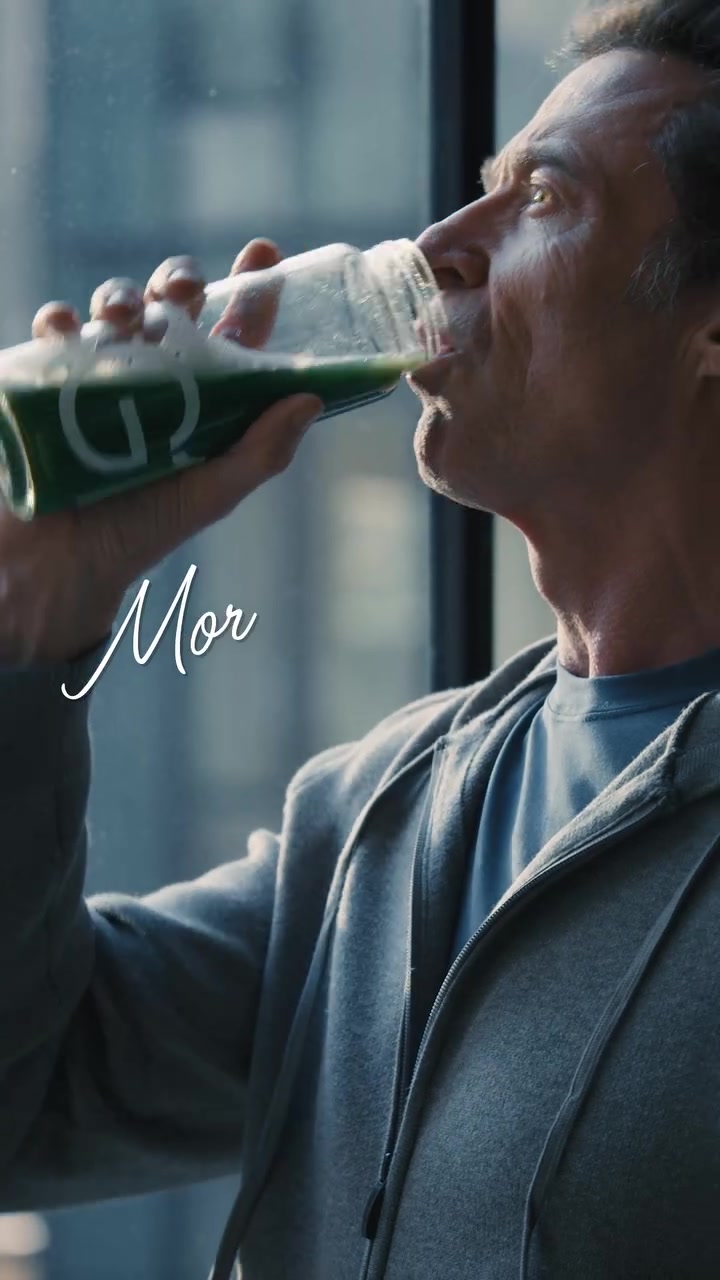
The lesson: this hook answers the obvious objection ("I already eat well") before the viewer can raise it.
Put together, that's a strategy: one product, four angles, four audiences, each in the format that fits it. In Adspo's visual format tags, AG1's active creatives split almost evenly between product shots (179), customer testimonials (176), offers (142) and demos (137). No single idea carries the account.
How to build a creative strategy in 5 steps
- Collect customer language. Pull 30 to 50 real phrases from reviews, comments and support tickets. Group them by problem and desire.
- Study 3 to 5 competitors. List their active ads that have run longest and tag each with its angle, hook and format. Note which angles nobody covers.
- Pick 3 to 5 angles. Each gets an audience, a one-line promise and the proof you'll use.
- Brief 3 hooks per angle. Match each angle to a format, then brief designers, editors or creators with the hook, the proof and a reference ad.
- Test, read, iterate. Launch angles as separate concepts. Make new hooks for the winners and drop the rest. Repeat every week or two.
The creative research tools roundup compares the tools teams use for step 2.
Creative strategy vs brand strategy
Brand strategy defines who the brand is: positioning, voice, values, logo and colors. It's set once and changes rarely.
Creative strategy works inside those rules. It decides which ads to make this week, for which audience, with which message, and it changes as results come in. AG1's brand is consistent across all four ads above. The strategy is in how differently each one sells.
A useful test: if a decision would still hold in two years, it's brand strategy. If it depends on last week's results, it's creative strategy.
How Adspo helps with creative strategy
The slowest part of building a creative strategy is the competitor research. The free Meta Ad Library shows a brand's ads, but it can't sort by runtime, doesn't group duplicate ads into one creative, and doesn't tag angles or formats. You count days and build the spreadsheet by hand.
Adspo does that part for you. Here's AG1's brand page in the Adspo app: 658 creatives against 1,031 ads, the media mix, target countries, landing pages and the visual format breakdown that shows how evenly AG1 spreads its angles.
 AG1's brand page in the Adspo app showing 658 creatives and 1,031 ads, creative velocity, media mix, target countries, landing pages and visual formats
Filter to active creatives and sort by longest running, and you get the angles AG1 keeps paying for, with runtime badges from 384 days down:
 AG1's active creatives in the Adspo app sorted by longest running, with runtime badges of 384, 381, 367, 313 and 264 days
- Longest running sort shows which angles a competitor keeps paying for.
- Impression rank shows which creatives a brand serves most within its own account.
- Visual format tags, hooks and transcripts let you tag angles in minutes, not hours.
- Boards keep your references in one place for briefs.
- 10,000+ verified brands to research, from $19/month billed yearly ($29/month monthly), with a 7-day free trial.
If you're comparing options first, see our list of the best ad spy tools or how Adspo compares as a Facebook Ad Library alternative.
Frequently asked questions
What is creative strategy in advertising?
Creative strategy in advertising is the plan that decides what your ads say, who they speak to and how they look. It turns customer research into angles (the reason to buy), hooks (the first line or frame) and formats (UGC, statics, demos), then tests them and keeps what works.
What is an example of a creative strategy?
AG1 is a clear one. In October 2026 its active Meta ads covered at least four angles at once: an offer-led static with a free welcome kit (the most-served creative in its own account), an expert video on sleep, a customer story about 48-hour shifts, and a short demo built on the line "Even healthy diets have nutrient gaps." Each angle speaks to a different buyer, and each has run for months.
What is the difference between creative strategy and brand strategy?
Brand strategy defines who the brand is: positioning, voice, values and visual identity. It changes rarely. Creative strategy works inside those rules and decides which ads to make next, for which audience, with which message. It changes every week as test results come in.
What does a creative strategist do?
A creative strategist researches customers and competitors, picks the angles and hooks worth testing, writes briefs for designers, editors and creators, and reads the results to decide what to iterate, scale or kill. They sit between the media buyer, who manages budgets and campaigns, and the people who make the ads.
Why does creative strategy matter more on Meta now?
Meta's automated campaigns now do most of the targeting work, so advertisers have fewer audience levers to pull. The ad itself has become the main way to reach a specific buyer. A different angle or hook effectively finds a different audience, which is why teams plan creative as carefully as they used to plan targeting.
How do you research a creative strategy?
Start with customer language from reviews, comments and support tickets. Then look at what competitors keep running: in the free Meta Ad Library, sort a brand's ads and check start dates, or use a tool like Adspo to sort any brand's active ads by longest running and see which angles they keep paying for.
Wrapping it up
Creative strategy is the plan for which ads to make and why: audiences, angles, hooks and formats, tested in a loop. Study what competitors keep running, give each angle its own audience and format, and let the results decide the next round.
Try Adspo free for 7 days and build your next creative strategy from the ads brands keep running.