

A street interview ad is a short video where a host with a microphone stops people in a public place, asks them a question and puts the product in front of them. You've seen them as "asking strangers to guess the price" clips and man on the street polls in your feed. The answers and reactions do the selling, so it plays more like a clip than a pitch.
Brands use the format because a stranger's reaction is harder to dismiss than a brand's claim. Most posts on street interview ads quote case study numbers you can't check and show few real ads. Below are 8 examples with their actual runtimes from Adspo, how to film one, and a script you can copy.
What is a street interview ad?
A street interview ad borrows the look of a TV vox pop and the pacing of a social clip. A host walks up to people, asks one simple question, cuts between several answers, then introduces the product and films the reaction.
Here's what you'll usually see:
- A visible microphone. Often with a branded flag on it. It tells the viewer what kind of video this is before anyone speaks.
- A real location. A sidewalk, park, mall or festival, with people passing in the background.
- Two or more people in frame. That's the clearest difference from a talking head ad.
- A fast montage of answers. The Farmer's Dog cuts through about 10 price guesses in under 10 seconds.
- Big captions. Street audio is messy and most people watch muted.
- A reveal. The price, the ingredient list or the product itself lands after the viewer has already formed a guess.
It comes in three common forms. The poll asks one question and stacks up the answers (Craftd, Louise Carter). The guessing game turns the product into a quiz, sometimes with cash on the line (The Farmer's Dog, The Conscious Bar, Suno). The try it on the spot format hands the product over and films the first reaction (Jones Road, Saje, LARQ).
In Adspo these sit under the Interview visual format. That tag also covers podcast clips and studio sit-downs (those have their own breakdown in podcast style ads), so we checked every example below to confirm it was shot in a public place.
Street interview ads vs testimonial ads
Both use real people talking about a product, which is why they get mixed up.
| Street interview ad | Testimonial ad | |
|---|---|---|
| Who's talking | Strangers, often new to the product | An existing customer |
| Who drives it | A host asking questions | The customer telling their story |
| Setting | Public place, handheld | Usually home, car or bathroom |
| What it proves | "People react like this when they find out" | "This worked for me" |
| Best for | Awareness, price surprise, products that demo in seconds | Objection handling, results over time |
The easy test is whether the person had the product before the camera started. Our testimonial ad examples show the other side. It's also different from a talking head ad, where one person speaks straight to the lens, and it's a close relative of the wider UGC ad family because it trades polish for believability.
Why brands use street interview ads
The question does the targeting. "How often do you clean your water bottle?" makes every bottle owner answer in their head. Craftd, Jones Road and LARQ all open directly on the question, with no intro.
Guessing creates a reason to stay. Once a viewer has a number in mind, they want to see if they were right. The Farmer's Dog collects guesses between $15 and $60 before giving its price.
Other people's reactions carry the claim. A brand saying its deal is good is advertising. A stranger saying "I would totally buy that" lands differently, which is the whole bet Louise Carter makes.
Brands keep them live. The median runtime of these 8 examples is 226 days, and The Farmer's Dog, Louise Carter and Craftd have each passed 390 days. Adspo can't see a brand's results, so that isn't proof of conversions. It does show they keep paying to run them.
8 street interview ad examples from real brands
We pulled active English video ads tagged Interview in Adspo on November 9, 2026, sorted by longest running and by number of ads, and searched transcripts for phrases like "asking strangers" and "street interview". We read the full transcripts of 14 candidates, checked frames from 11 to confirm they were shot in public with strangers or passersby, and kept one per brand across different categories. We left out ads built on staff answering customer questions, acted skits, and one strong ad whose hook was too profane to quote. Impression rank is where the ad sits among that brand's own ads, by impressions, not across Meta.
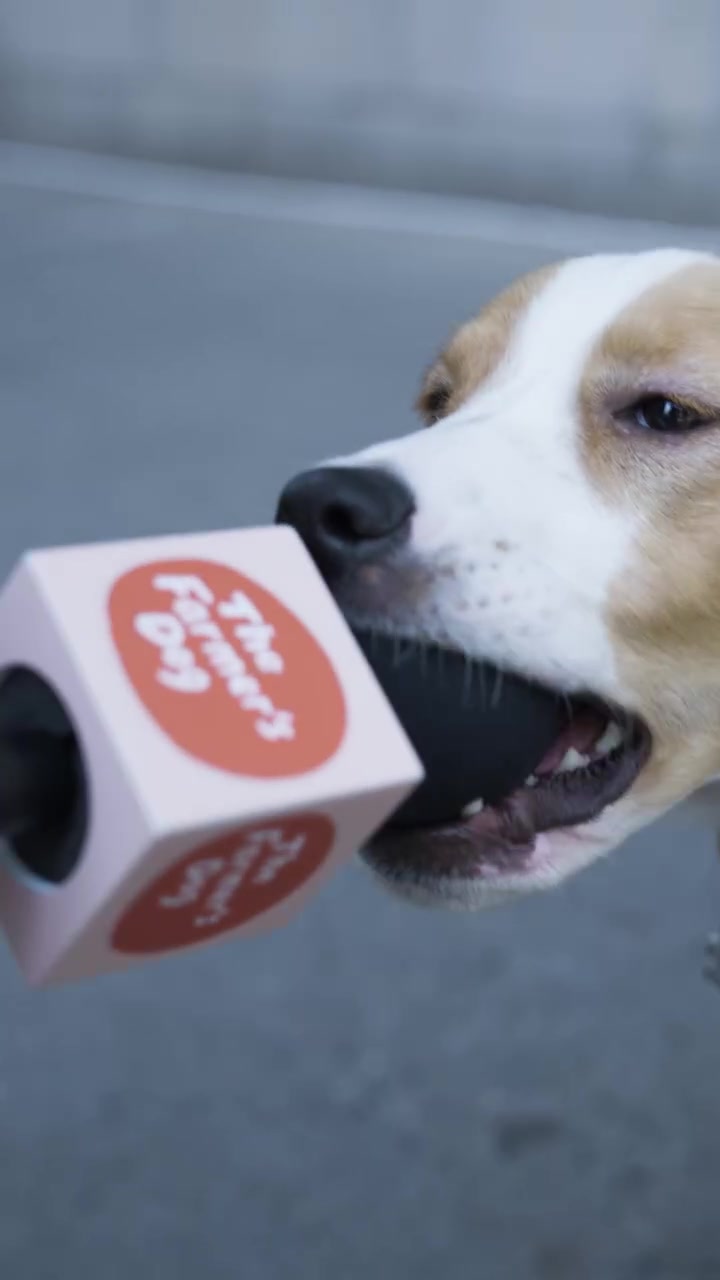
1. The Farmer's Dog: a dog steals the mic, then strangers guess the price
A dog grabs the branded microphone in the first shot. Then the host reads out everything in the product and asks people what it would cost per day.
Ad data:
- Running for: 401 days (since Oct 2025), still active
- Impression rank: #86 of The Farmer's Dog's creatives
- Format: Video: interview, guessing game
The hook: "Oh no, don't steal the microphone!"
What makes it a good street interview ad: The price guess is the whole structure. The answers climb as high as $60, so "as low as $2 per day, depending on the size of your dog" feels like a real reveal, and the host follows it with one honest example for a 55 pound dog.
Steal this: If people overestimate your price, ask them to guess it, then cut together the highest guesses before you answer.
2. Louise Carter: a poll on jewelry spend that ends in an offer
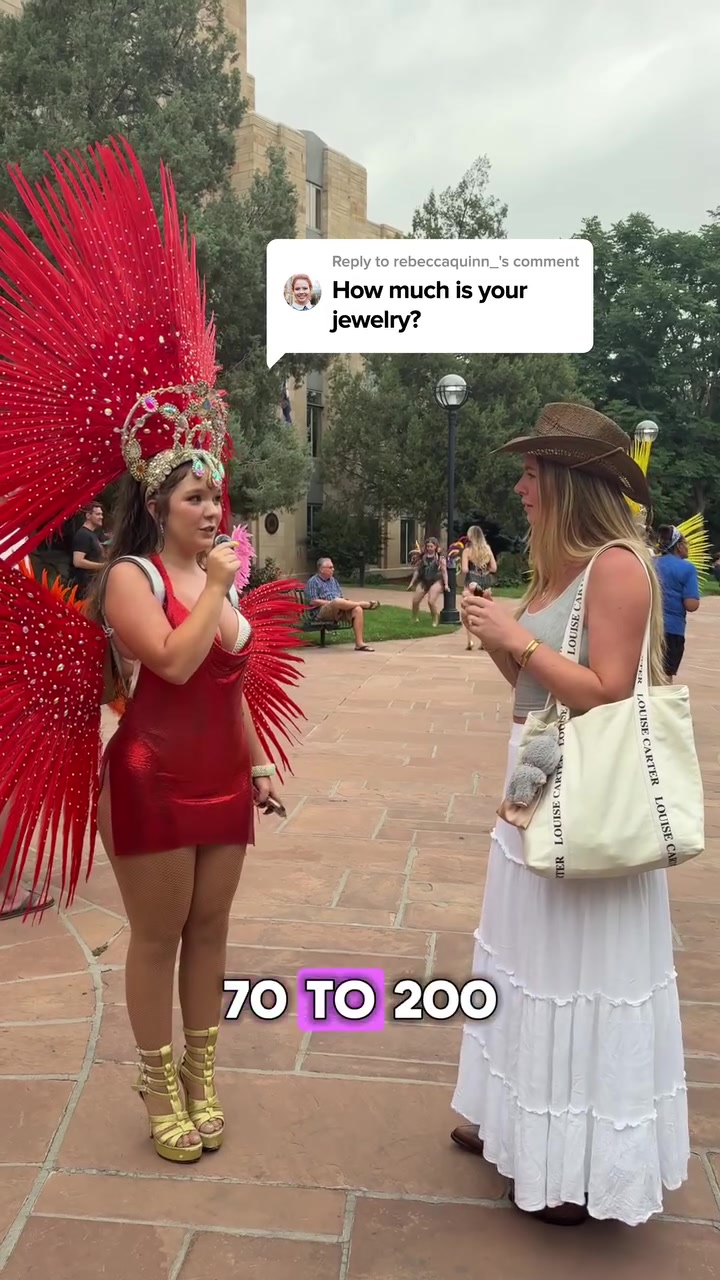
Filmed at a festival, this one opens as a reply to a comment asking how much the jewelry costs. The host asks people what they'd normally spend, then pitches them the bundle.
Ad data:
- Running for: 397 days (since Oct 2025), still active
- Impression rank: #1 of Louise Carter's creatives
- Format: Video: interview, offer
The hook: "How much do you spend on a single piece of jewelry usually?"
What makes it a good street interview ad: The answers set the anchor for the offer. Once people have said 40, 80 or 200 dollars for one piece, 7 pieces for $85 sounds cheap without the brand having to argue it.
Steal this: Ask what people pay for the category today, then state your offer in the same units.
3. Craftd: one yes or no question, five quick yeses
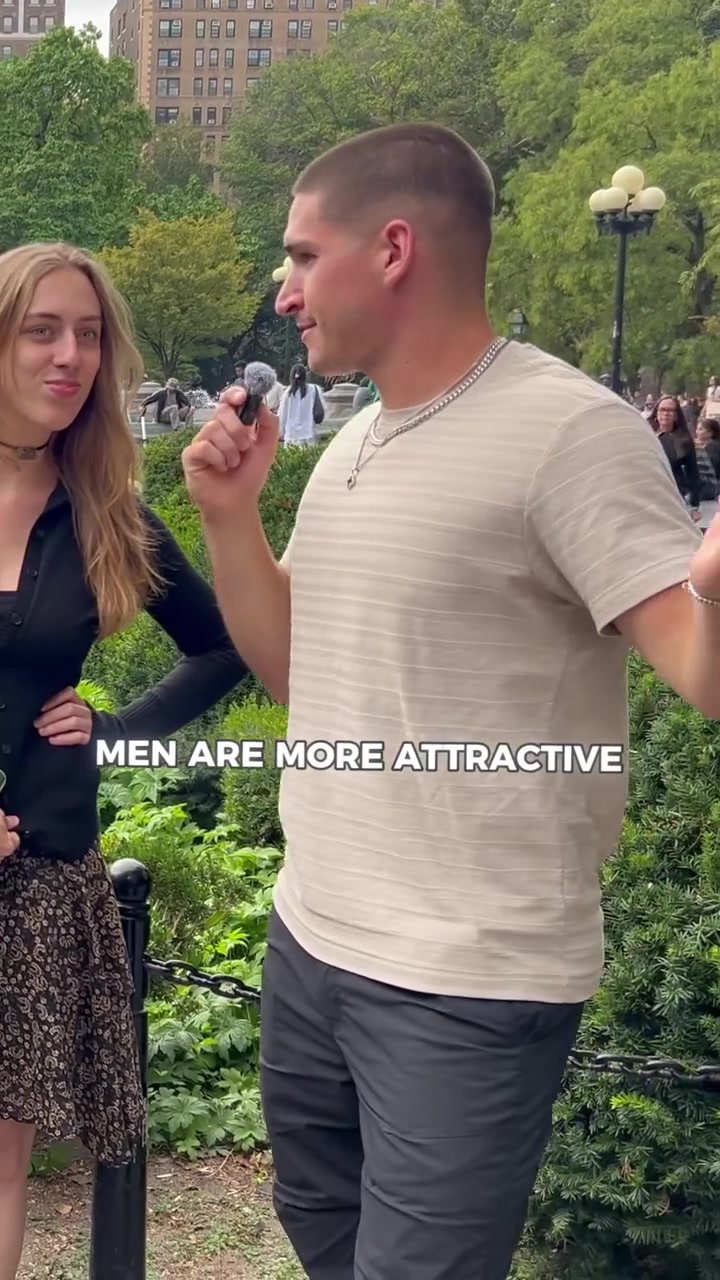
Craftd asks people in a park whether men look better with jewelry on. The product doesn't show up until after the answers.
Ad data:
- Running for: 391 days (since Oct 2025), still active
- Impression rank: #148 of Craftd's creatives
- Format: Video: interview, customer testimonial
The hook: "Do you think men are more attractive with jewelry on?"
What makes it a good street interview ad: It asks the question the buyer privately cares about, then answers it with other people. A run of five fast yeses takes under 3 seconds and does more than a line of copy could.
Steal this: Find the opinion your buyer wants confirmed and ask it as a yes or no question.
4. Jones Road Beauty: qualify, then let them try it
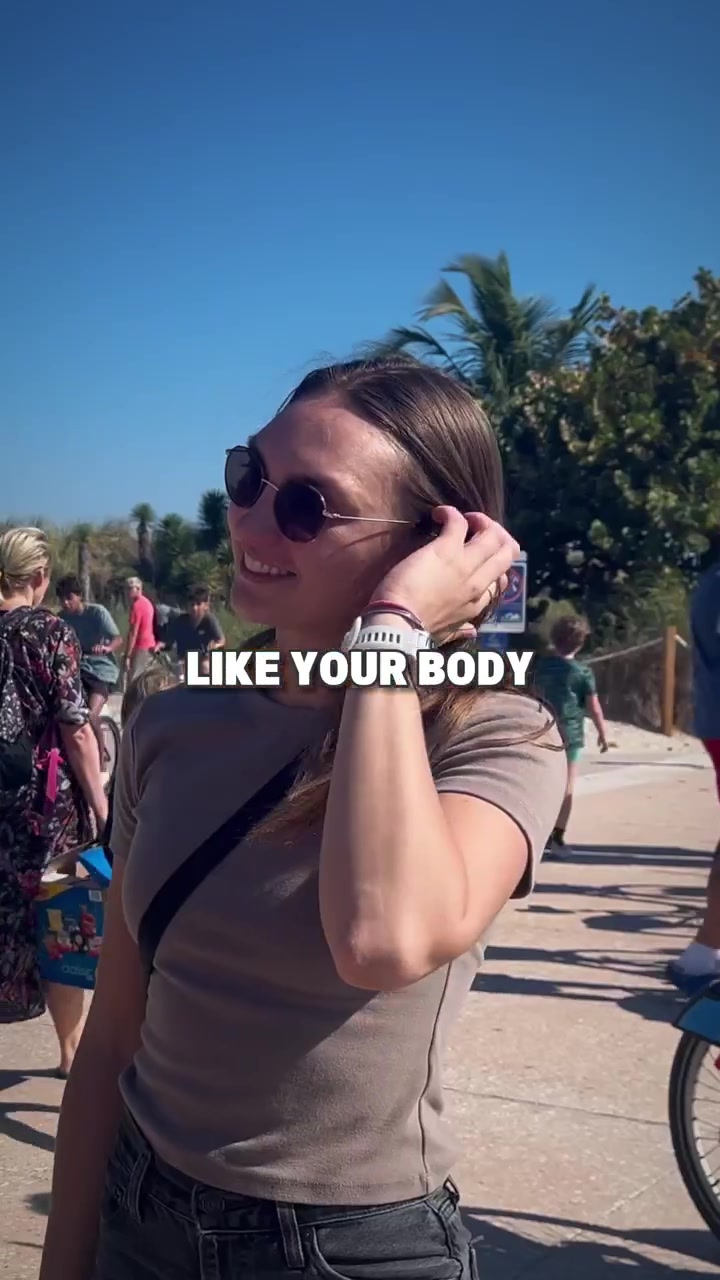
The host asks two skincare questions, then hands over the lotion. The sale happens when the person feels it on their skin.
Ad data:
- Running for: 304 days (since Jan 2026), still active
- Impression rank: #1467 of Jones Road Beauty's creatives
- Format: Video: interview, customer testimonial
The hook: "Do you typically like your body care a little bit more rich or lightweight?"
What makes it a good street interview ad: The first questions turn a stranger into the target customer on camera: they like lightweight, and their skin gets dry in cold weather. Then the product answers what they just said. The rank is low, but this creative is attached to 53 ads, so the brand has kept using it.
Steal this: Ask 2 questions that surface the problem before the product appears.
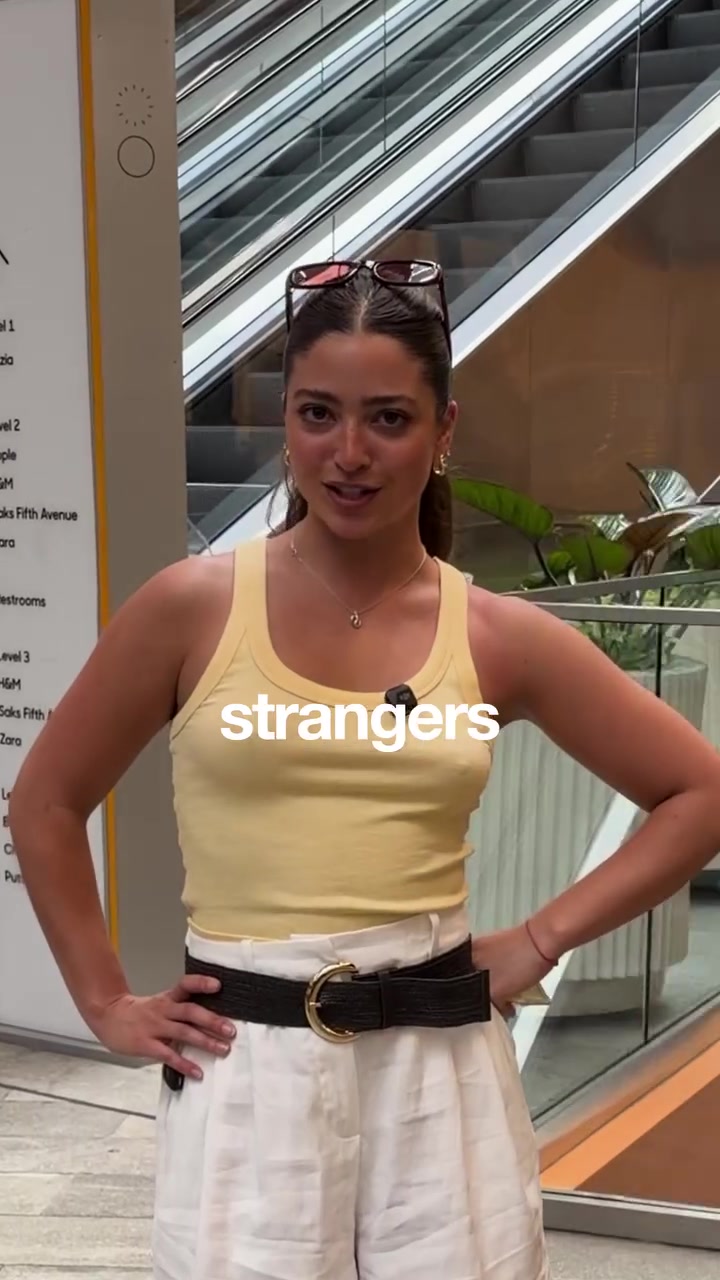
5. The Conscious Bar: $20 if you can name the ingredients
The host stops people in a mall, has them taste a chocolate bar cold and offers cash if they can guess what's in it.
Ad data:
- Running for: 148 days (since Jun 2026), still active
- Impression rank: #166 of The Conscious Bar's creatives
- Format: Video: interview, taste test
The hook: "I'm asking strangers today to guess the ingredients in the world's healthiest chocolate bar."
What makes it a good street interview ad: It's the longest here at about 84 seconds, and the game earns that length. Every wrong guess ("milk", "coconut oil") quietly makes the point that the bar has fewer ingredients than people expect.
Steal this: If your selling point is what's not in the product, make people guess what is.
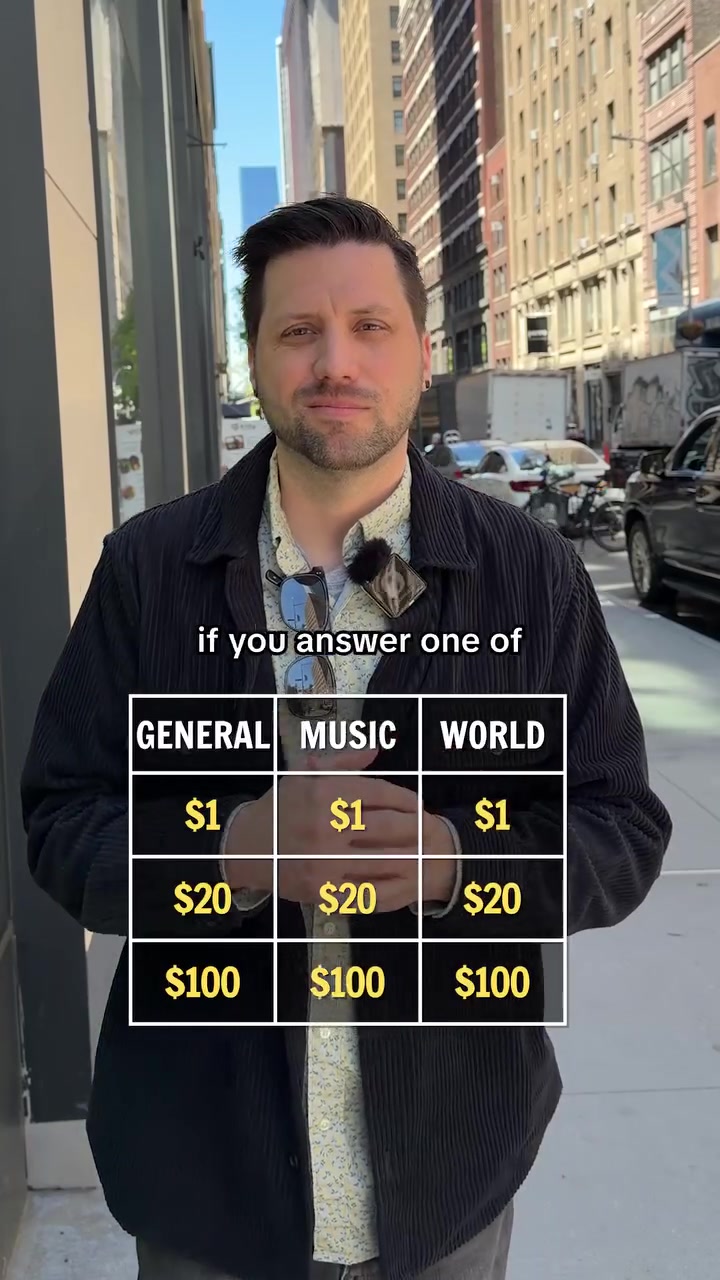
6. Suno: a sidewalk quiz with a cash board
A host holds a quiz board with money values on a city sidewalk. The person picks a category, gets a question and the answer is the product.

Ad data:
- Running for: 145 days (since Jun 2026), still active
- Impression rank: #209 of Suno's creatives
- Format: Video: interview, customer testimonial
The hook: "Give away money if you answer one of these questions right."
What makes it a good street interview ad: At about 21 seconds it's the shortest here, and it shows the format works for software. The contestant's answer runs like product copy, so this is closer to a sponsored quiz than a candid poll. Suno has it attached to 58 ads.
Steal this: Build a quiz where the right answer is your brand, and keep it short so the setup doesn't feel like a trick.
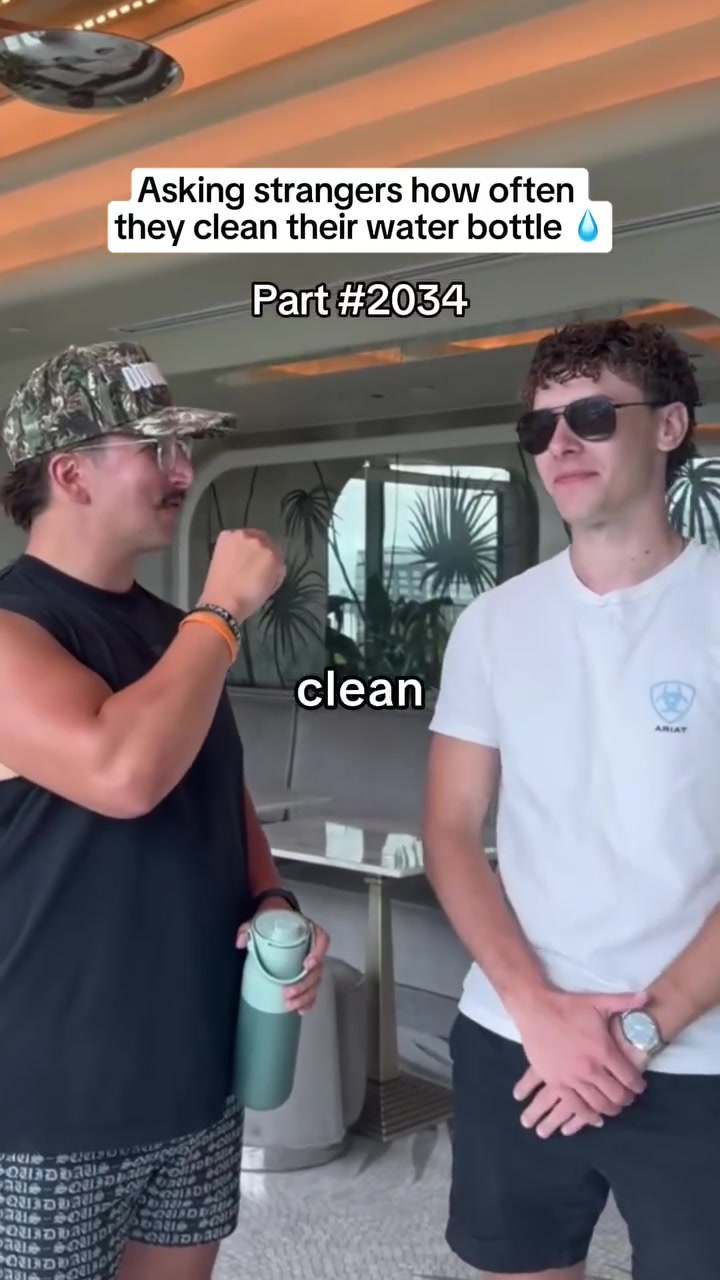
7. LARQ: a slightly gross question and a live demo
A host asks a passerby how often they clean their water bottle, reacts to the answer and shows them one that cleans itself.
Ad data:
- Running for: 95 days (since Aug 2026), still active
- Impression rank: #33 of LARQ's creatives
- Format: Video: demo, interview
The hook: "How often do you clean your water bottle?"
What makes it a good street interview ad: The question creates a small moment of guilt, and "at least once a month" gets a reaction the viewer can join in on. Getting the stranger to press the button turns the feature into something that happens on camera.
Steal this: Ask about the habit your product fixes, and have the stranger operate the product instead of the host.
8. Saje: walking a whole street through one product
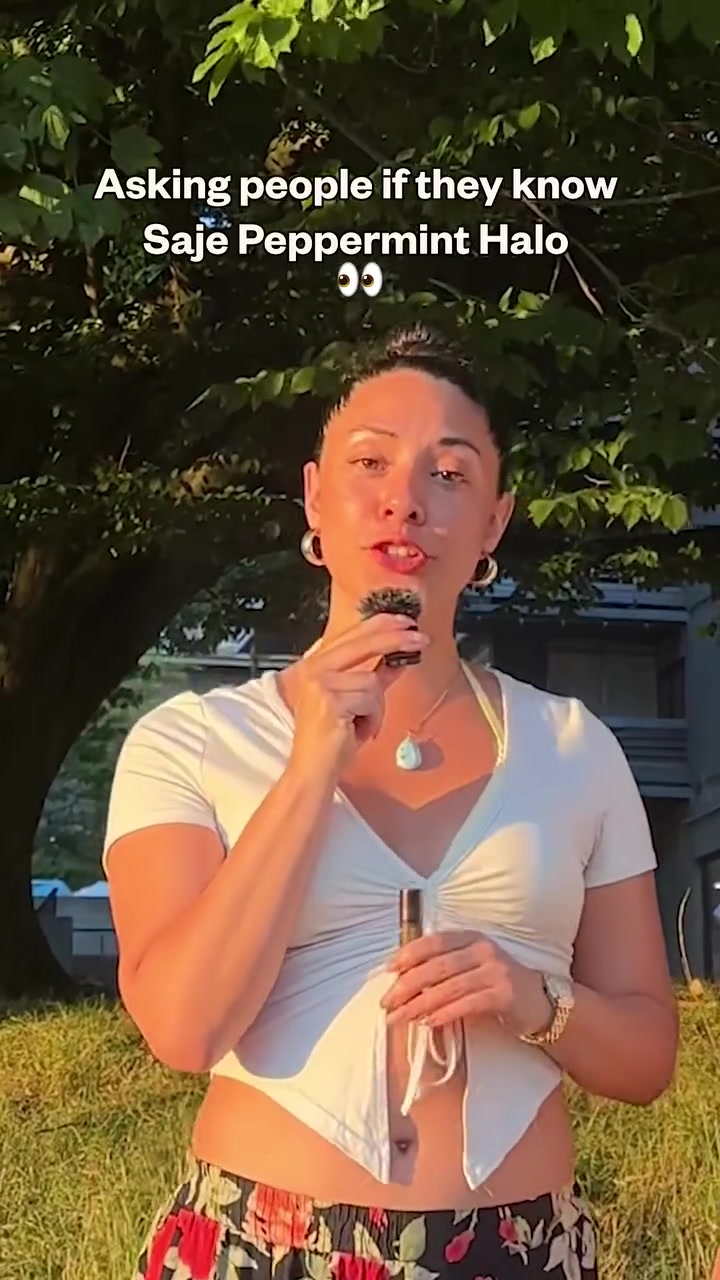
The host asks people if they know a best seller and puts it on them right there. The point gets said out loud at the end: it spreads from person to person.
Ad data:
- Running for: 92 days (since Aug 2026), still active
- Impression rank: #159 of Saje Wellness's creatives
- Format: Video: demo, interview
The hook: "Asking strangers on the street if they know what Saje Peppermint Halo is."
What makes it a good street interview ad: It covers both kinds of stranger, the person who already knows the product and the one who doesn't. "First word, go" is a neat trick for getting short, usable reactions.
Steal this: Ask for a one-word reaction. You'll get cleaner clips and an easy montage.
How to make a street interview ad: step by step
Step 1: Pick one question
Choose a question that your buyer has an opinion on and that a stranger can answer in 5 seconds. The 3 reliable types are price ("what would you pay?"), habit ("how often do you...?") and opinion ("do you think...?"). If the question needs explaining, it's the wrong question.
Step 2: Decide where the reveal is
Know what lands at the end before you shoot: the real price, the ingredient list, the first sip. Everything before the reveal should make the viewer form a guess.
Step 3: Choose the location for your buyer
Go where your buyer already is. A festival for jewelry, a gym entrance for a water bottle, a mall for snacks. Look for busy foot traffic, a background that isn't too loud and open shade.
Step 4: Bring a host who can take a no
Most people will walk past. A host who stays warm and quick matters more than camera gear. Give them the question and the facts, not a script.
Step 5: Shoot on a phone with a real mic
Use a phone and a handheld or wireless mic, and make the mic visible. Film far more people than you need, since you'll only use the best few seconds of each. Have release forms ready and get one signed by everyone who ends up in the ad.
Step 6: Cut hard and caption everything
Open on the question or the most surprising answer, never the host saying hello. Cut to answers fast, keep the good stumbles, and caption every word.
Step 7: Test the opening, not the whole ad
Take the same footage and cut 3 or 4 versions with different opening answers. It's the cheapest way to test, and the creative testing framework post covers how to read the results.
Street interview ad script template
Here's a structure to copy for a guessing game. For a poll or a try it on the spot ad, swap the middle section.
0-3s    Hook: Host asks the question on camera, or cut straight to the wildest answer.
        "How much do you think [product] costs per day?"

3-12s   Montage: 5 to 8 quick answers, one cut each.
        "$20?" / "Maybe $30." / "$60?"

12-20s  Setup: Host names the product and the 2 facts that matter.
        "It's [what it is], and [the thing they wouldn't expect]."

20-28s  Reveal: The number or the first try. Stay on the face.
        "It's actually [real price]."  "Wait, what?"

28-35s  Reactions: 2 or 3 unprompted lines, the shorter the better.
        "That's cheaper than I thought."

35-40s  Close: Host or on-screen text gives the next step.
        "[Offer]. Tap below to try it."
Common mistakes
- Scripting the surprise. Viewers have seen a lot of these. If every reaction is the same line, they'll spot it.
- Passing off actors as strangers. If people are paid, know the brand or are reading lines, don't present them as random passersby.
- Skipping the release form. Filming someone in public doesn't mean you can use their face to sell a product.
- A question nobody cares about. "What do you think of supplements?" gets shrugs. "What did you pay for your last bottle?" gets a number.
- Leading with the host. Nobody needs a hello. Start on the question.
- No reveal. A montage of people saying "it's nice" doesn't give the viewer a reason to finish.
Find street interview ad examples with Adspo
The Meta Ad Library can't filter by format, so finding these means guessing at brands and scrolling. Adspo tags creatives by visual format, so you can start with just the Interview ads.
 Adspo's Discover feed with a Visual format filter applied and active ads sorted by longest running, shown here on the Listicle / Tier List format
In the Adspo Discover feed, add a Visual format filter and pick Interview. Sort by longest running to see what brands have kept live, then search transcripts for "asking strangers" to separate the street clips from podcasts and studio interviews. Every ad shows its runtime, its impression rank in the brand's account and where it sends traffic. For more openers to borrow, see our ad hook examples.
Adspo costs $29 a month, or $19 a month billed yearly, with a 7-day free trial.
Frequently asked questions
What is a street interview ad?
A street interview ad is a short video where a host with a microphone stops people in a public place, asks a question and puts the product in front of them. The answers and reactions are the ad. It's also called a man on the street ad, a vox pop or street polling.
What are the best street interview ads?
The 8 in this post are the ones we'd study first, because brands have kept them live for 92 to 401 days. The Farmer's Dog asks people to guess the daily cost of its food, Louise Carter asks what people spend on jewelry, and Suno runs a cash quiz on the sidewalk.
How long should a street interview ad be?
The 8 examples here run from about 21 to 84 seconds, with a median near 36. The longest is The Conscious Bar's ingredient guessing game, which holds attention with a $20 prize. If you don't have a game or a reveal, stay under 45 seconds.
Are street interview ads real or staged?
Both exist. Some are strangers answering cold, others use actors, creators or people who were told what the shoot is for. You usually can't tell from the ad, so don't present scripted or paid reactions as spontaneous. In the US, the FTC's endorsement guides expect material connections to be disclosed.
Do you need permission to film street interview ads?
Get a signed release from everyone who appears on camera before you run the footage as an ad. Using someone's likeness to sell a product is different from filming a public street for news. Check local rules on filming permits too, and ask a lawyer if you're unsure.
Where can I find street interview ad examples?
Adspo tags creatives with an Interview visual format. Filter the Discover feed to that format, keep active ads and sort by longest running. The tag also includes podcast clips and studio interviews, so search the transcript for phrases like "asking strangers" to narrow it to the street.
Wrapping it up
A street interview ad needs one good question, a host people will stop for and a reveal worth waiting for. Brands like The Farmer's Dog and Louise Carter have kept theirs running for more than a year. Start with one question, film 30 people and cut 3 openings.