

A native ad on Facebook is a plain photo with no text on it, often AI-generated to look like a phone snap, paired with a very long caption that tells a story. Nothing on the image says "ad": no headline, no logo, no offer. It looks like a post from someone you know, and the caption reads like one too, until the product shows up near the end.
Brands use native ads because people scroll past things that look like ads and stop for things that look like posts. This post defines the format the way it works in the social feed (not the display banner kind), shows 10 native ads brands are running now, and gives you a template to write your own.
What is a native ad?
"Native" means the ad matches its surroundings. On a news site, a native ad is a sponsored article that looks like the other articles. In the Facebook feed, it's an ad that looks like the other posts: a photo someone took, and a long caption about something that happened to them.
What's in a social native ad:
- A photo with no text on it. No headline, no price, no logo, no arrows. Just a scene: someone on a bed, a couple on a pier, a man at a kitchen table.
- An image that looks like a phone snap. Ordinary rooms, ordinary light, slightly messy. Many native images are AI-generated to look exactly like this.
- A very long caption. Hundreds or thousands of words, written in the first person: a confession, a family story, an insider who "worked in the industry for 30 years".
- The product late. It shows up as part of the story's turn, not in the first line.
- A link to keep reading. Often an advertorial or a dedicated page that picks up where the caption stops.
A quick test: cover the brand name and the Sponsored label. If the image could be from anyone's camera roll and the caption reads like a post, it's native. If the image has a headline, a pack shot or a price on it, it isn't.
Native ads vs static ads and display native ads
"Native ad" means two different things depending on who you ask, and it's easy to mix them up with a plain static ad.
| Social native ad | Static ad | Display native ad | |
|---|---|---|---|
| Where it runs | Facebook and Instagram feed | Facebook and Instagram feed | News sites, via Taboola, Outbrain and similar |
| The image | A plain photo, no text | Product shot, headline, offer | A thumbnail in a "recommended" widget |
| The copy | A long first-person story | A few lines | A clickbait-style headline |
| What carries it | The caption | The image and the offer | The headline |
| Where it usually links | An advertorial or a dedicated page | A product or collection page | An advertorial |
This post is about the first column. If you came here for display native networks and ad specs, that's a different job, though the copy ideas below still apply. If you want text on the image (a Notes page, a sticky note, a headline), that's a static or text-heavy ad, not a native one. For people on camera, see our guides to UGC ads and yapper ads.
Why brands use native ads
- They get past ad blindness. People have learned to scroll past anything with a headline and a pack shot. A photo of a stranger on their bed looks like a post.
- The story does the selling. A long caption can walk through a problem, the things that didn't work and a turn, the way a friend would tell it. A static ad has a headline.
- They're cheap to test. One image and one story. Brands like Rosabella and Mars Men run many versions of the same idea with different stories and photos.
- Brands keep them live. Elavate's cruise photo has run for 369 days, and Hume Health's for 158. Several of the newer ones are already high in their brand's account: BOOM Beauty's is its 12th most-served creative after 20 days.
10 native ad examples from real brands
How these were picked: we opened Adspo's Discover feed filtered to the Native visual format and active ads, and checked each creative by eye and by its copy. We kept only ads where the image has no text on it and the caption is a long story (over 600 words), and dropped tagged ads with headlines or text on the image. One ad per brand, across supplements, skincare, health, coffee, soap and bedding, ordered by runtime. This is a newer format, so several examples are weeks old rather than months. Data pulled from Adspo on October 20, 2026. Impression rank is the ad's position among that brand's own creatives, where #1 is the most served. Word counts are of the full caption.
1. Elavate: a couple on a pier, and 6 "side effects"
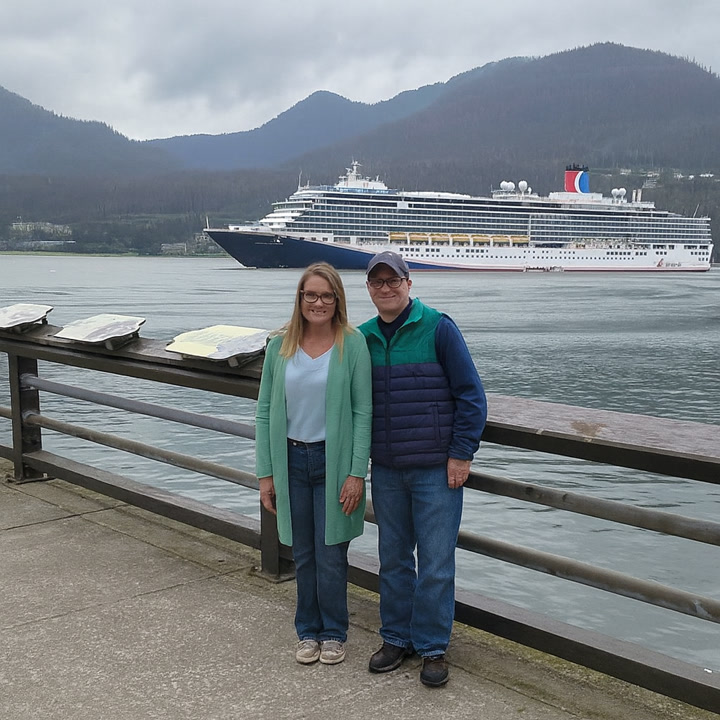
Elavate, a UK collagen brand, shows a couple standing on a pier with a cruise ship and mountains behind them. It looks like a holiday photo.

Ad data:
- Running for: 369 days (since October 2025), still active
- Impression rank: #34 of Elavate's creatives
- Format: Image: native, live in 13 ads, 682-word caption
The hook: "Everyone who's planning to try Elavate needs to know these 6 "side effects""
What makes it a good native ad: The photo is a scene from the life the product promises, a trip, with nothing on it to say "ad". The caption is a numbered list of "side effects" that turn out to be benefits, which keeps people reading point by point. It's the longest-running example here.
Steal this: Show the outcome as an ordinary holiday photo and let the caption explain how they got there.
2. Hume Health: a mirror selfie and a 2,121-word story
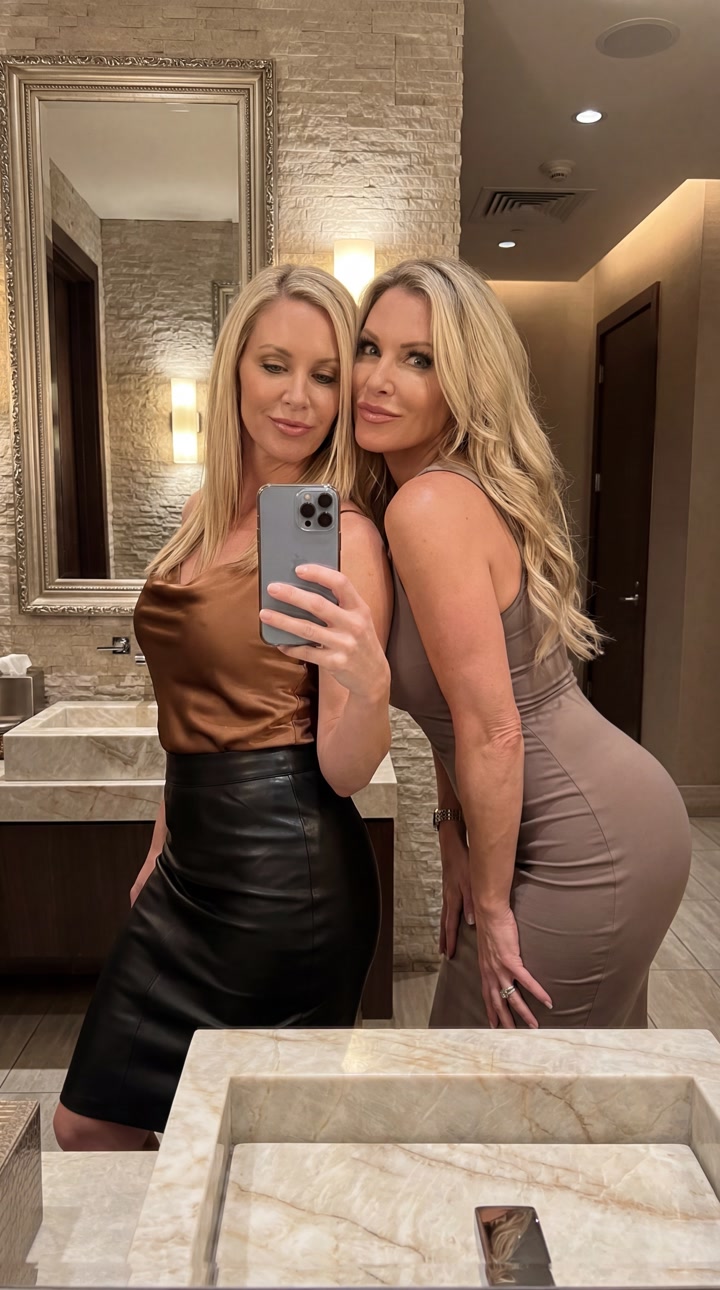
Hume Health shows two women taking a mirror selfie in a marble bathroom, dressed for a night out. The caption is a story about a marriage.
Ad data:
- Running for: 158 days (since May 2026), still active
- Impression rank: #1520 of Hume Health's creatives
- Format: Image: native, live in 2 ads, 2,121-word caption
The hook: "I caught my husband cheating during perimenopause and it nearly destroyed me."
What makes it a good native ad: The opening line is impossible to scroll past, and the image is the "after" of the story: a woman out with a friend, looking good. The caption introduces a named narrator ("Hello, my name is Michelle. I'm a 43-year-old mother of three.") and only gets to the product much later.
Steal this: Open with the most dramatic true moment in your customer's story, and make the photo the happy ending.
3. First Day: a teen asleep on the couch
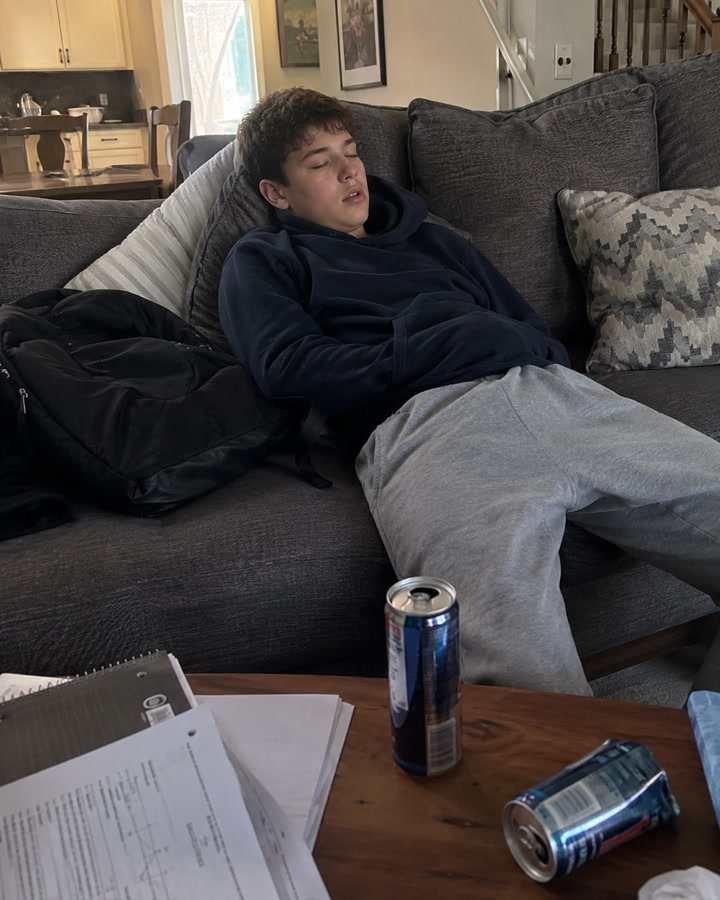
First Day, a vitamin brand, shows a teenage boy asleep on a couch next to energy drink cans and schoolwork. The caption is his mother's story.

Ad data:
- Running for: 81 days (since July 2026), still active
- Impression rank: #257 of First Day's creatives
- Format: Image: native, live in 2 ads, 1,790-word caption
The hook: "My son's school counselor called me in and gave me 90 days."
What makes it a good native ad: The photo is the problem, shot like a parent snapped it from the doorway. The first line sets a deadline, so you read on to find out what happened. The headline, "I Thought I Was Losing My Son", keeps it in the parent's voice.
Steal this: Write from the buyer's point of view (here, a parent), not the user's, when they're the one paying.
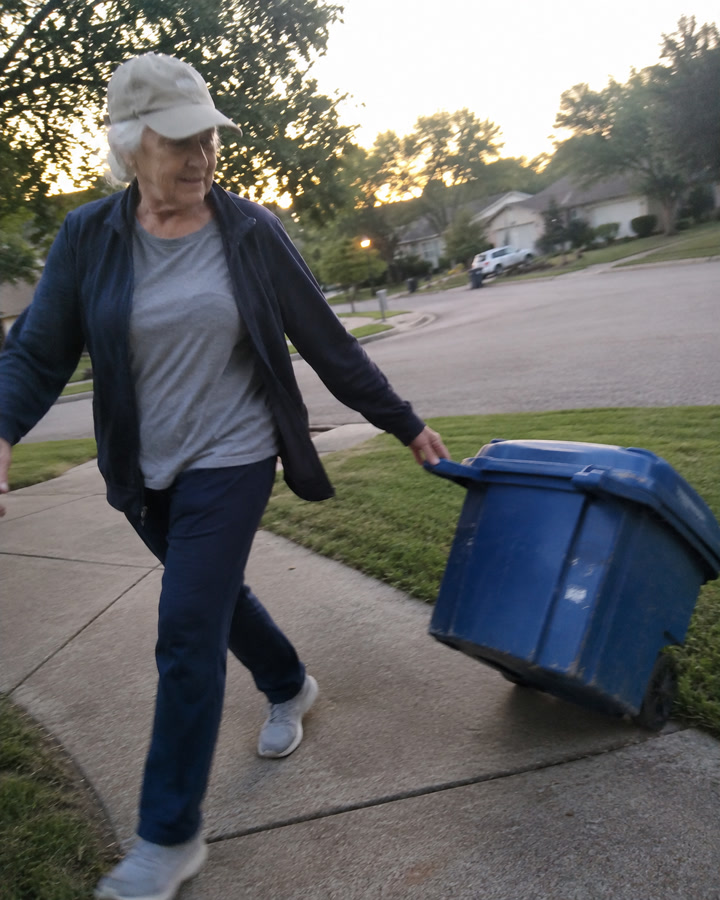
4. Rosabella: a bin day photo and a feature story
A candid photo of an older woman wheeling her bin to the curb, with a caption that reads like a magazine feature.

Ad data:
- Running for: 60 days (since August 2026), still active
- Impression rank: #253 of Rosabella's creatives
- Format: Image: native, live in 3 ads, 2,748-word caption
The hook: "She Hasn't Missed a Morning in Thirty-One Years."
What makes it a good native ad: It's written in the third person, like a feature story ("Picture a street at ten to seven in the morning. An ordinary cul-de-sac."), which is rare in ads and makes it feel even less like one. Rosabella runs many versions of this idea, each with a different town and a different character.
Steal this: Try a third-person story about a character your buyer wants to become.
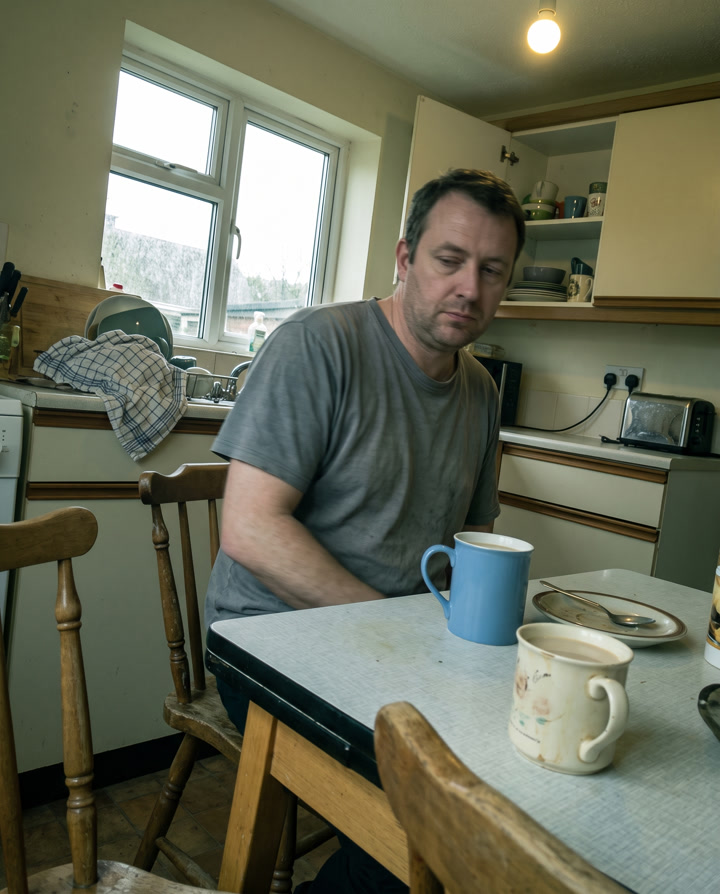
5. Javvy Coffee: a marriage story with a coffee at the end
Javvy shows a man sitting alone at a kitchen table with a mug. The caption is his wife's story about their marriage.

Ad data:
- Running for: 60 days (since August 2026), still active
- Impression rank: #1589 of Javvy Coffee's creatives
- Format: Image: native, 2,396-word caption
The hook: "My husband and I became coworkers sometime during our ninth year of marriage."
What makes it a good native ad: Nothing in the photo is about coffee, and the caption reads like a personal essay: "We simply stopped talking about anything that couldn't be added to a calendar." The headline, "Now I make the coffee.", hints at the turn without selling.
Steal this: Write a story where your product is a small part of the ending, not the subject.
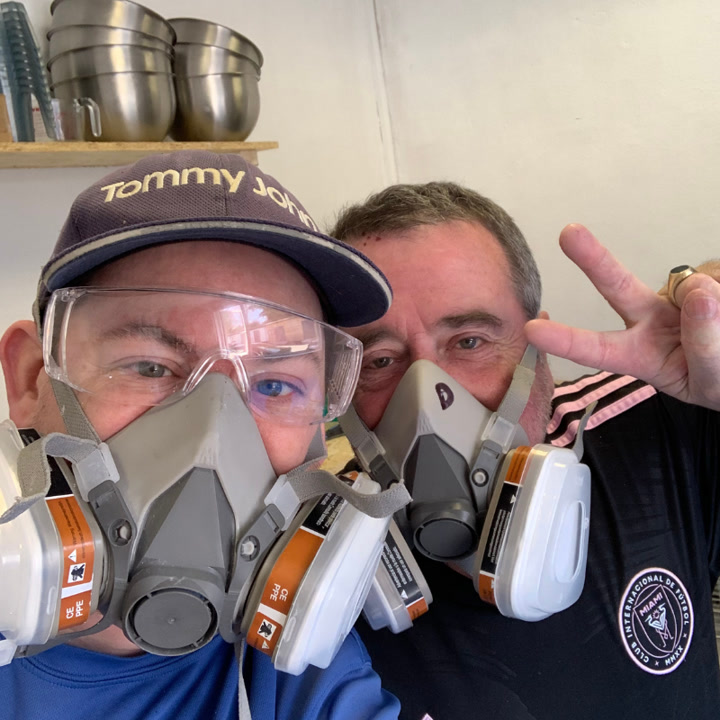
6. The Black Stuff: a founder selfie in respirator masks
The Black Stuff, a soap brand, shows two men in respirator masks and safety glasses taking a selfie in a kitchen. The caption is the founder's story.
Ad data:
- Running for: 56 days (since August 2026), still active
- Impression rank: #99 of The Black Stuff's creatives
- Format: Image: native, live in 8 ads, 2,127-word caption
The hook: "A common question I got in the early days was around my wearing of the ventilation mask."
What makes it a good native ad: It answers a question nobody asked about a strange photo, which is exactly how founders post. The caption turns quickly into an origin story ("Did you know the first bar of soap I ever made cut my stomach open too?"), and the headline, "Like breaking bad. But soap.", makes it sound like a show, not a product.
Steal this: Post a weird behind-the-scenes photo and let the founder explain it in the caption.
7. Mars Men: a man on the edge of his bed
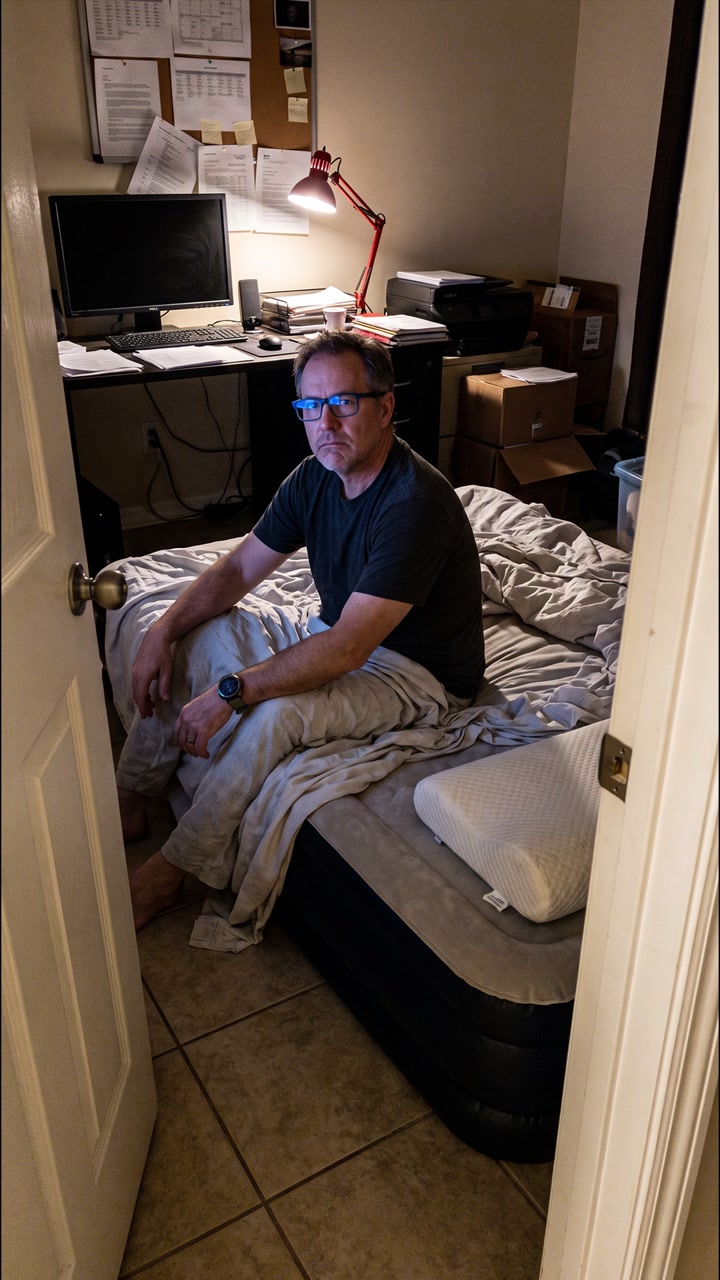
Mars Men shows a man in glasses sitting on an unmade bed in a cluttered home office, looking worn out.

Ad data:
- Running for: 45 days (since September 2026), still active
- Impression rank: #1649 of Mars Men's creatives
- Format: Image: native, live in 4 ads, 658-word caption
The hook: "For a year, I woke up more tired than when I went to bed."
What makes it a good native ad: The photo is the problem at its most ordinary: a tired man, a messy room, no product. At 658 words it's the shortest caption here, and it moves fast, from the problem to "a hormone doctor told me I had it all backwards". It links to a "10 reasons" page, going by its URL.
Steal this: Picture the problem at its most ordinary and let the first line name it in the buyer's words.
8. Frasé Skin: a question in the first line
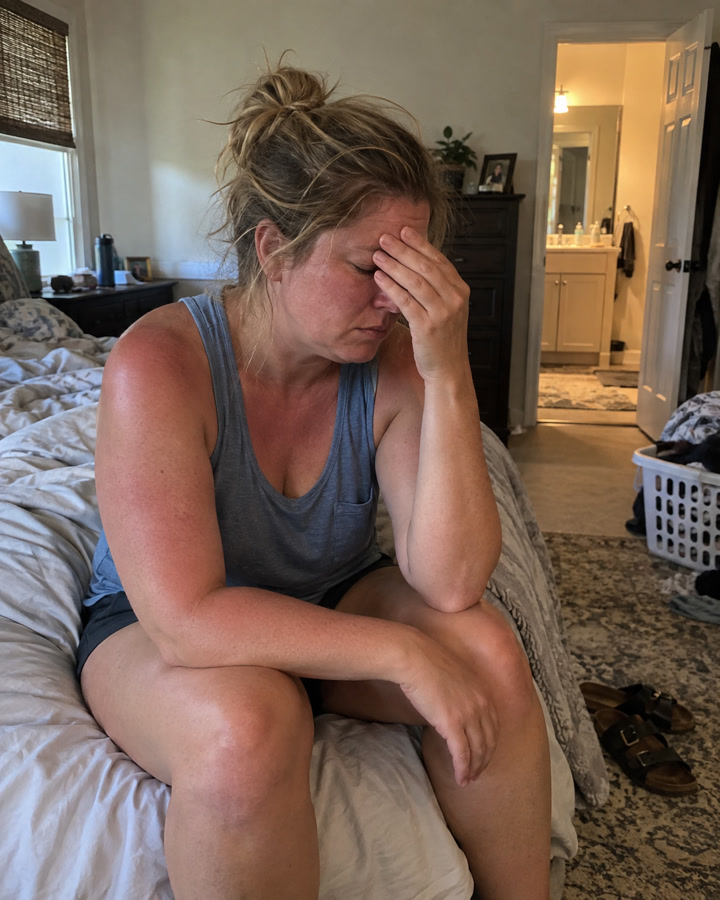
Frasé Skin, an Australian sunscreen brand, shows a woman sitting on her bed with her head in her hand. The caption opens with a fact and a question.

Ad data:
- Running for: 43 days (since September 2026), still active
- Impression rank: #579 of Frasé Skin's creatives
- Format: Image: native, 768-word caption
The hook: "So why did two Australian brothers create an SPF50 sunscreen that intentionally allows some UVB light through?"
What makes it a good native ad: It's a curiosity hook rather than a story: a product that sounds like it shouldn't exist, explained over a few hundred words. The photo is unrelated to sunscreen, which is the point. It looks like a post, and the caption carries the explanation.
Steal this: If your product does something counterintuitive, make that the question in the first line.
9. BOOM Beauty: "I'm 63"
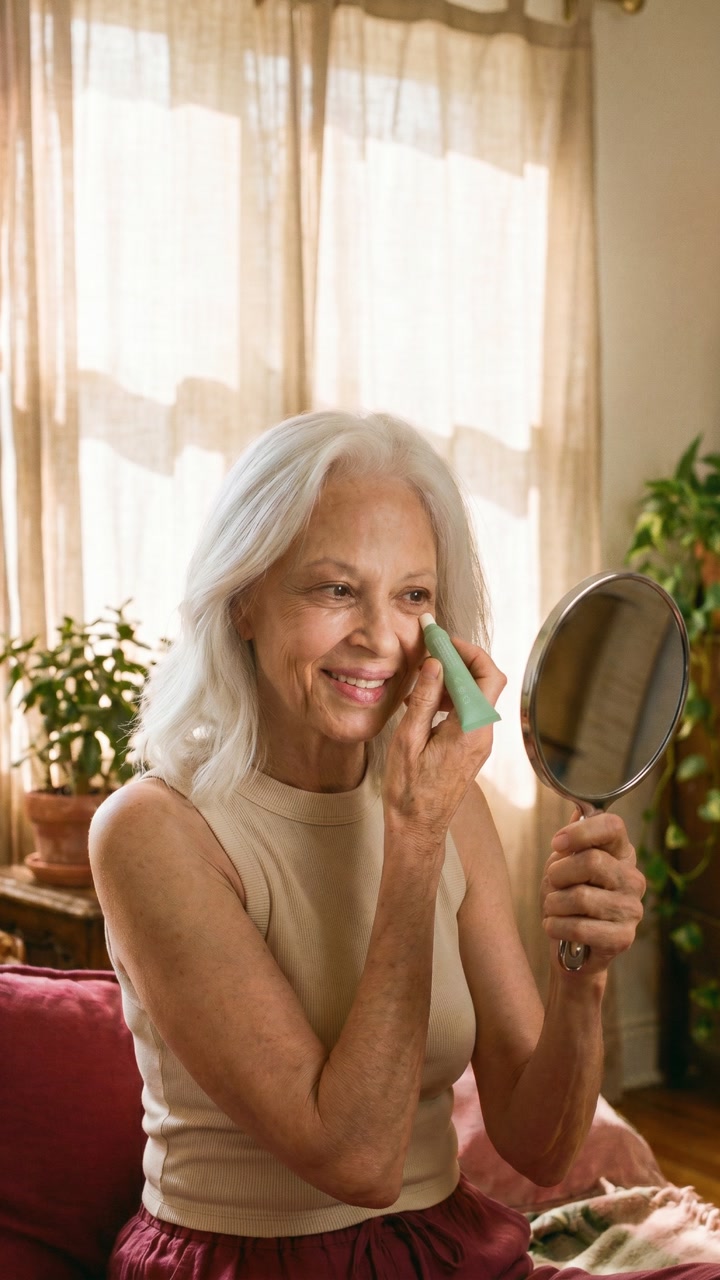
BOOM Beauty shows an older woman with white hair sitting by a window, checking her face in a hand mirror.
Ad data:
- Running for: 20 days (since September 2026), still active
- Impression rank: #12 of BOOM Beauty's creatives
- Format: Image: native, 3,100-word caption
The hook: ""I'm 63, and I Didn't Recognize the Woman in the Photo.""
What makes it a good native ad: The caption is the longest here at 3,100 words, and it opens with an age and a feeling the reader recognizes. The story starts with a real scene ("a picture my daughter had taken of me at her son's birthday party"). It's already BOOM's 12th most-served creative after 20 days.
Steal this: Put the narrator's age and one specific moment in the first line.
10. Onuia: an insider confession and a ghost costume
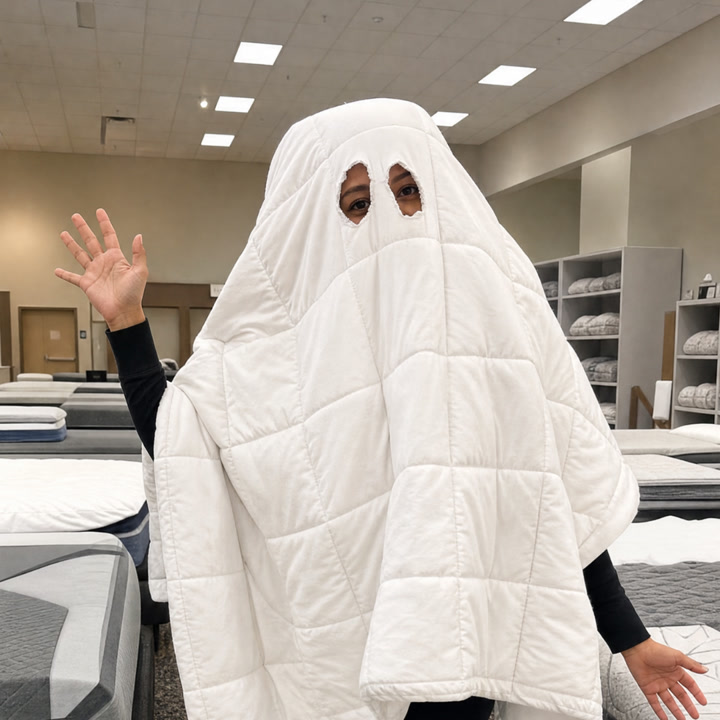
Onuia, a bedding brand, shows someone wearing a mattress topper like a ghost costume in a mattress store. The caption is from a man who worked in mattress sales.

Ad data:
- Running for: 5 days (since October 2026), still active
- Impression rank: #81 of Onuia's creatives
- Format: Image: native, 1,157-word caption
The hook: "The U.S. mattress industry is a scam."
What makes it a good native ad: The insider confession ("I worked in a mattress shop for 30 years") is a classic native opener, and the goofy photo looks like an employee's post, not a brand's. It's the newest example here, so it shows the format being tested right now.
Steal this: Tell the story from an industry insider who's "finally saying it".
How to make a native ad: step by step
Step 1: Pick one person and one moment
Every example is one narrator and one scene: a mother called into school, a wife whose marriage went quiet, a founder in a respirator. Decide who's telling the story and the moment it starts.
Step 2: Make the image a plain photo
No text, no logo, no product shot. Show the problem (a man on his bed, a teen asleep on the couch) or the outcome (a couple on holiday). Shoot it on a phone, or generate it to look like a phone snap: ordinary rooms, imperfect light, a bit of mess.
Step 3: Write a first line that forces "See more"
Facebook shows a few lines, then cuts the rest. Open with a confession ("I caught my husband cheating"), a deadline ("gave me 90 days"), an age ("I'm 63") or a bold claim from an insider ("The U.S. mattress industry is a scam").
Step 4: Tell the whole story before the product
Problem, what they tried, what didn't work, the turn. The captions here run from 658 to 3,100 words, and the product comes in at the turn, not the top. Keep it in the first person (or a third-person feature, like Rosabella).
Step 5: Keep it honest
Native means it looks like a post, not that it lies. A story still can't make health, weight loss or income claims Meta wouldn't allow in a normal ad, and testimonials should be real or clearly illustrative.
Step 6: Send the click to a page that continues the story
6 of the 10 examples link to a separate page rather than a standard product page, like Mars Men's "10 reasons" page. See our supplement landing page examples for advertorials that pick up where a native caption leaves off.
Native ad template
Copy this, fill in the brackets and pair it with a plain photo.
NATIVE AD TEMPLATE
Image: plain photo, NO text, looks like
a phone snap (problem or outcome)
Caption: 600 to 3,000 words, first person

LINE 1 (before "See more")
"[Confession / deadline / age / insider
  claim, in one sentence]"

THE SETUP (150 to 400 words)
Who I am: "[name, age, situation]"
The moment: "[one specific scene]"

THE STRUGGLE (200 to 800 words)
"I tried [x], [y], [z]..."
"[what went wrong, in plain words]"

THE TURN (100 to 300 words)
"Then [someone] told me [the insight]."
Product enters here, as part of the story.

THE RESULT (100 to 400 words)
"[what changed, specific and honest]"

CLOSE
"If you [problem], [read more / try it]."
Headline: [hint at the turn, don't sell]
Link: a page that continues the story

CHECK
No text on the image.
Would a friend post this photo?
Every claim is one Meta would allow.
Common mistakes
- Text on the image. A headline, price or logo on the photo turns it back into a static ad. Keep the image clean.
- A photo that looks produced. Studio light, a perfect pack shot or a model pose gives it away. It should look like someone's camera roll.
- Selling in the first line. If line one names the product, nobody taps "See more". Start with the story.
- A short caption. Three lines of copy under a plain photo is just a vague ad. The format needs the long story.
- Big claims in a casual voice. A first-person story is still an ad, and Meta reviews it like one.
- A landing page that breaks the spell. Send people to a page that continues the story, not straight to a checkout.
Find native ad examples with Adspo
The Meta Ad Library shows any brand's ads, but it can't filter by style, so finding native ads means scrolling brand by brand and opening every caption (here's how to use the Facebook Ad Library if you want to try).
 Adspo's Discover feed filtered to the Native format and active ads, sorted by longest running, with runtime badges from 479 down to 91 days on candid photos, selfies and a few text posts
In the Adspo Discover feed you can add a Visual format filter, pick Native, and sort by longest running or most impressions, across 10,000+ verified brands. As the grid shows, the tag also catches some text posts, so look for the plain photos and open the caption. Each creative shows its runtime, its impression rank within the brand's own account and its full ad copy, so you can read the whole story, not just the first line. For more copy to study, browse our Facebook ad copy examples and Facebook ad examples.
Adspo costs $29 a month, or $19 a month billed yearly, with a 7-day free trial.
Frequently asked questions
What is a native ad?
On Facebook, a native ad is an ad made to look like an ordinary post: a plain photo with no text on it, often AI-generated to look like a phone snap, and a very long caption that tells a story. There's no headline on the image, no logo and no offer badge. The caption does all the selling, and it reads like something a person wrote, not a brand.
What is an example of native advertising on Facebook?
Javvy Coffee runs a photo of a man sitting at a kitchen table with a mug. The caption is a 2,396-word story from his wife that opens "My husband and I became coworkers sometime during our ninth year of marriage." Coffee doesn't come up until much later. The 10 examples in this post have captions between 658 and 3,100 words.
How long should native ad copy be?
Much longer than a normal ad. The 10 captions in this post run from 658 to 3,100 words, with a median of about 1,950. Facebook cuts the caption off after a few lines with "See more", so the first line has to make people tap. After that, it reads like an article.
Is a native ad the same as an advertorial?
They're related. An advertorial is an article that sells, usually on a landing page. A social native ad puts that kind of story straight into the Facebook caption, then often links to an advertorial to finish it: 6 of the 10 examples here link to a separate page rather than a standard product page.
Are native ads allowed on Facebook?
Yes. Every ad on Facebook still shows the Sponsored label, so the platform discloses it for you. The caption still has to follow Meta's ad policies: a first-person story doesn't make a health, weight loss or income claim acceptable. Keep the look native and the claims honest.
Where can I find native ad examples?
The free Meta Ad Library shows every active ad for a brand but can't filter by style. In Adspo you can open Discover, add a Visual format filter for Native and sort by longest running or most impressions. The tag also catches some text posts, so look for the plain photos with long captions.
Wrapping it up
A native ad on Facebook is a plain photo with no text and a long caption that tells a story. The 10 above open with a confession, a deadline or a question, keep the product out of the first line and run from 658 to 3,100 words. Pick one narrator and one moment, and write the story first.
Try Adspo free for 7 days and filter Discover by the Native format to read the stories brands in your niche are running.